 Rocket Ads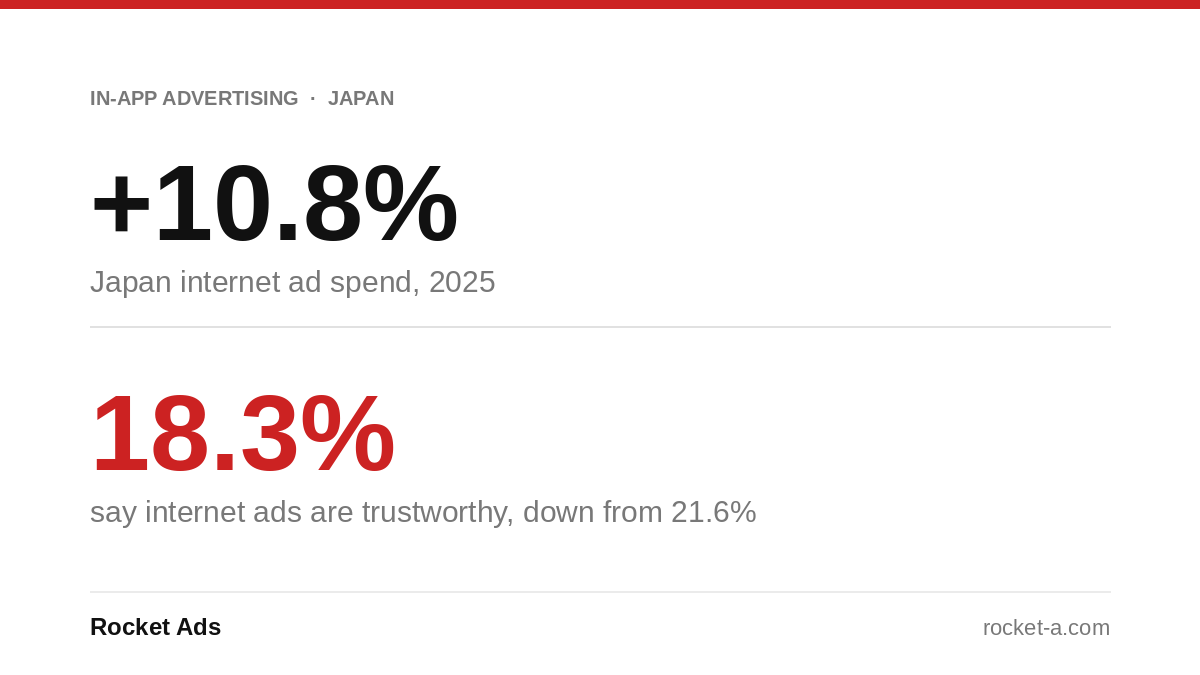
Watch anyone sit through a pre-roll ad. They are not watching the ad. They are watching the corner of the screen, waiting for the skip button to turn on.
The same happens inside your game. A player opts into a rewarded ad, the video ends, and the screen still does not close, because an end card is there to be dismissed. If in-app advertising carries a real share of your revenue, those seconds are not a detail.
How Long Can One Ad Actually Run
Longer than most teams assume, and the ceiling is set in two places.
Google Play requires full-screen interstitials to be closable after 15 seconds, with an exception written into the rule: opt-in interstitials, and ones that do not interrupt what a player is doing, may persist beyond 15 seconds (Source: Google Play · 2026 · Ads Policy). A rewarded ad the player chose sits outside it entirely.
The creative specs fill in the rest. Unity and AppLovin both cap video at 60 seconds, and Unity requires every video ad to carry an end card (Source: Unity · 2026 · Creative Specifications). The video finishing and the ad finishing are two different moments.
| Ad the player did not choose | Ad the player opted into |
|---|---|
| Must be closable after 15 seconds | May persist beyond 15 seconds |
| Video creative up to 60 seconds | Video creative up to 60 seconds |
| End card required on every video ad | End card required on every video ad |
No network publishes average ad length, so this is not a claim that ads got longer. It is a claim about where the room to get longer sits, which is on the side the player opened themselves.
What Players Are Actually Tired Of
In a survey of 300 Japanese game players, the most common reason for watching an ad was the obvious one: the reward, at 44%. The rest is less comfortable. Asked what bothered them, players named ads being too long and appearing too often, both around 60%. Asked what they wanted changed, the top answer was a skip function at 57%, then shorter ads at 44%. A bigger reward ranked below both (Source: Lighthouse Studio · 2025-02 · In-Game Ad Survey).
| What Japanese players asked to change | Share |
|---|---|
| A skip function | 57% |
| Shorter ads | 44% |
| A bigger reward | Ranked below both |
| Already paid to remove ads | 24% |
And 24% had already paid to remove ads, a segment buying its way out of your ad revenue. Neither top request is about the size of the trade. Both are about knowing where it ends.
Money and Trust Are Moving Apart
Japanese ad spending reached ¥8.06tn in 2025, up 5.1%, while internet advertising grew 10.8% to ¥4.05tn and passed half of all ad spend for the first time (Source: Dentsu · 2026-03 · Japan Ad Expenditures).
Over the same period, the share of Japanese users who call internet advertising trustworthy fell to 18.3% from 21.6%, and more said their trust had decreased than said it had grown (Source: JIAA · 2026-08 · Internet Ad User Survey).
| Japan | Figure | Change |
|---|---|---|
| Total ad spend, 2025 | ¥8.06tn | +5.1% |
| Internet ad spend, 2025 | ¥4.05tn, 50.2% of all ad spend | +10.8% |
| Trust in internet ads, 2026 | 18.3% | Down from 21.6% |
Budgets are moving one way. The audience is moving the other.
What IAA-Monetized Games Should Watch
Four pairs worth putting side by side before raising ad frequency. Retention against impressions, because a higher eCPM does not help if DAU moves the other way. Time to completion measured to the end card, not the end of the video, because that is what a player experiences. Ad-removal purchases against ad revenue, since in some ranges those lines move in opposite directions. And engagement difficulty against review sentiment, because completion rates can look healthy in a week when the reviews do not.
For many games, and plenty of non-game apps, ad revenue is now a main pillar of monetization. Our own partners see both sides. A CPE campaign that gets players genuinely engaged also produces ad revenue along the way, shortening the payback period on the campaign itself.
The harder part is worth saying too. In Korea, low review scores have been appearing with comments that the process was painful, or that it felt forced. Push an engagement design too hard and players hand that back.
So the question is not whether to run ads or rewarded campaigns. It is where the line falls between the point ad revenue peaks and the point retention holds. Finding that line with a partner is a large part of what we do.
For more data and insights, explore our articles on rocket-a.com or follow our LinkedIn page.
If you’re interested in running campaigns across Japan’s local media, you’ll find introductory materials, campaign references, and estimated simulation data tailored to your app right here on the site.